Deadliest Catch Confirms a 33-Year-Old Deckhand Passed Away on the Time Bandit — What Went So Horribly Wrong That Cost Him His Life?
Deadliest Catch Deckhand Passes Away at 33 Aboard Time Bandit – What Tragic Events Led to His Untimely End?
Justin Tennison Passes Away at 33: The Early Loss of a Deadliest Catch Deckhand

In a series defined by danger, exhaustion, and constant risk, death is never far from the edges of Deadliest Catch. Yet some losses strike harder than others—not because they were filmed, but because they feel profoundly unfair. Justin Tennison, a former deckhand on the Time Bandit, died suddenly at just 33 years old. No dramatic storm, no on-deck accident, no heroic last stand against the sea. Just a life cut short by sudden medical complications, leaving fans stunned and searching for meaning.
Justin’s death did not come after decades of work or a long, storied career. It came early—before wealth, before stability, before the chance to step back from the grind. That is what makes his passing so unsettling. He represented a reality that many viewers rarely confront: for some fishermen, the cost of the sea is paid long before the rewards ever arrive.
The official cause was sudden medical complications. Details were limited, and perhaps that silence made the loss even heavier. There was no single villain to blame—no rogue wave or catastrophic failure. Instead, Justin’s death underscored a harsh truth about life in one of the world’s most extreme professions: constant physical stress, irregular sleep, brutal schedules, and years of wear on the body can leave even young men vulnerable.
Crab fishing is not just dangerous in moments of crisis. It is punishing every day. Deckhands work long hours in freezing conditions, lifting heavy pots, enduring violent motion, and pushing their bodies past normal limits season after season. Recovery time is scarce. Healthcare access is inconsistent. Warning signs are often ignored—not out of ignorance, but necessity. When the season is short and the money is on the line, stopping feels impossible.




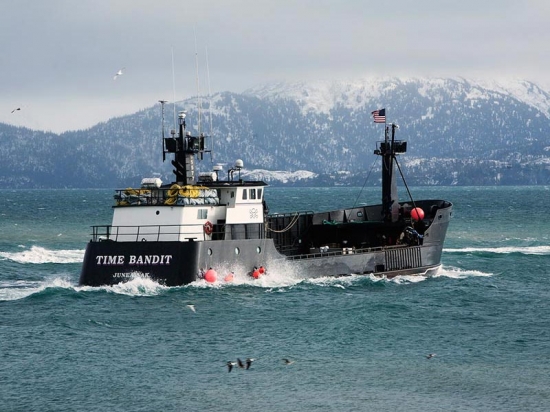
Justin Tennison lived that reality. As a deckhand, he was part of the engine that made the operation run, yet his role came without the security or financial cushion enjoyed by captains. Deckhands rarely accumulate wealth quickly. Pay is seasonal, unpredictable, and often offset by long periods without income. For many, the job is a gamble—sacrifice now in hopes of stability later.
Justin never reached that “later.”
When he died, reports made one detail painfully clear: he left behind very little in terms of material assets. No boat in his name. No long-established fortune. No legacy measured in property or wealth. What he left instead were memories—shared seasons at sea, friendships forged under pressure, and the respect of those who worked beside him.
For fans, this reality hit hard. Deadliest Catch often frames risk as part of a heroic journey—danger endured in exchange for reward. Justin’s story breaks that narrative. He gained recognition, yes. A place in television history, however small. But fame does not guarantee security, and exposure does not equal protection. The sea gave him a name, but it took his time.
His death forces an uncomfortable reflection on the lifespan of a deckhand’s career. Many do not fish into old age. Bodies give out. Injuries accumulate. Health problems surface early. The work that builds reputation can also quietly erode the future. Justin’s passing at 33 is not just tragic—it is symbolic of how short the window can be.

There is also the emotional toll. Life at sea often delays stability. Relationships strain under long absences. Plans are postponed. Savings are uncertain. For young fishermen, the promise of “one more season” becomes a recurring justification. Justin, like many before him, was still in that phase—working toward something that never fully materialized.
Fans responded with grief not only for Justin, but for what his death represents. He was not a captain with a completed legacy. He was a working man still building his life. His loss feels raw because it reminds viewers that not every story on Deadliest Catch ends with survival, success, or reflection. Some end quietly, off-camera, with questions left unanswered.
“ The sea gives fame, but takes youth,” many fans wrote—and in Justin’s case, that sentiment feels painfully accurate. The ocean offered him purpose and brotherhood, but demanded more time than he ever had to give. His story strips away the romanticism and leaves only the truth: some sacrifices are permanent.
Justin Tennison may not have left behind wealth or property, but he left something else—an honest reminder of the cost of this life. His name now stands for all the deckhands whose risks are real, whose rewards are uncertain, and whose time is never guaranteed.
At 33, Justin should have been planning the future. Instead, he became part of Deadliest Catch’s most sobering legacy: proof that in this profession, survival itself is never promised—and sometimes, the price is paid far too soon.