THE $140M DEAL: Parker Schnabel’s Mid-Season Pivot Shatters Klondike Records
THE $140M DEAL: Parker Schnabel’s Mid-Season Pivot Shatters Klondike Records

At 29 years old, Parker Schnabel has achieved what many veteran miners considered a mathematical impossibility. By walking away from “guaranteed” gold to chase a geological theory, Schnabel has concluded a historic season with a staggering $140 million in total enterprise value, including over 7,200 ounces of raw gold recovered.
The season, now being hailed as the most explosive in the history of the Gold Rush era, centered on a high-stakes “pivot” that nearly divided Schnabel’s crew and left competitors questioning his sanity.
The Theory of the Paleo-Channel
For three years, Schnabel quietly analyzed geological surveys of ground that had been dismissed by miners since the 1890s. While others saw “uneconomical” deep ground, Schnabel saw Paleo-channels—ancient, deeply buried creek systems that concentrated gold thousands of years before surface deposits formed.
“Everyone was running the old math,” Schnabel explained. “The old math was right for the old conditions. But equipment and gold prices changed. The assumptions people used to assess this ground were 20 years out of date.”
The Mid-Season Pivot
Eleven weeks into a productive season, Schnabel made the radical decision to abandon his current, functional infrastructure and relocate his entire heavy equipment fleet to unproven ground. The move cost 19 days of downtime and millions in lost production.

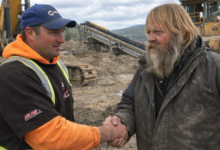



The risk was so high that three veteran crew members declined to make the move, fearing a total loss of their seasonal earnings. Schnabel, however, remained resolute. “A guaranteed season is worth one year,” he reportedly told his foreman. “What I think is over there is worth a decade.”
Day 17: The Discovery
The gamble initially looked like a disaster. The first two weeks on the new site yielded only “good” numbers—certainly not enough to justify the massive mobilization costs. Critics suggested Schnabel had finally pushed his luck too far.
However, on the 17th day of sluicing at the new depth, the operation struck the heart of the ancient creek bed. The result was a cleanup that stopped the entire crew in their tracks. The gold was coarser and more concentrated than anything seen in modern Klondike independent mining.
By the Numbers
What followed was a six-week production run that redefined industry standards:
-
Total Gold Recovered: 7,200+ ounces.
-
Direct Recovery Value: ~$14.4 million.
-
Proven Reserves: Estimated 60,000+ recoverable ounces remaining in the formation.
-
Total Enterprise Value: $140 million, including infrastructure and claims.
The density of the deposit was so extreme that processing capacity—rather than finding gold—became the operation’s primary bottleneck. Schnabel was forced to rapidly reconfigure his wash plants to handle the sheer volume of material.
A New Framework for the Yukon
The aftermath of the $140 million season has sent shockwaves through the mining community. Operators who previously dismissed deep-formation mining are now scrambling to reassess adjacent claims.
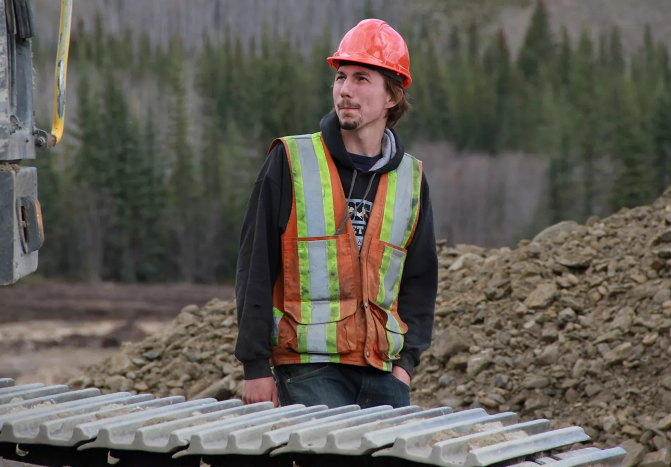
Industry observers note that Schnabel’s success wasn’t a product of “luck,” but of a three-year analytical build-up. Universities and equipment manufacturers are already studying his methodology, which treats gold mining as a sophisticated data-driven enterprise rather than a game of chance.
“I didn’t set out to change the industry,” Schnabel said. “I set out to mine gold. The changing of the industry is a side effect of being right.”
As the Yukon winter sets in, Schnabel is reportedly already studying his next survey, proving that for the King of the Klondike, $140 million is merely the new baseline.